
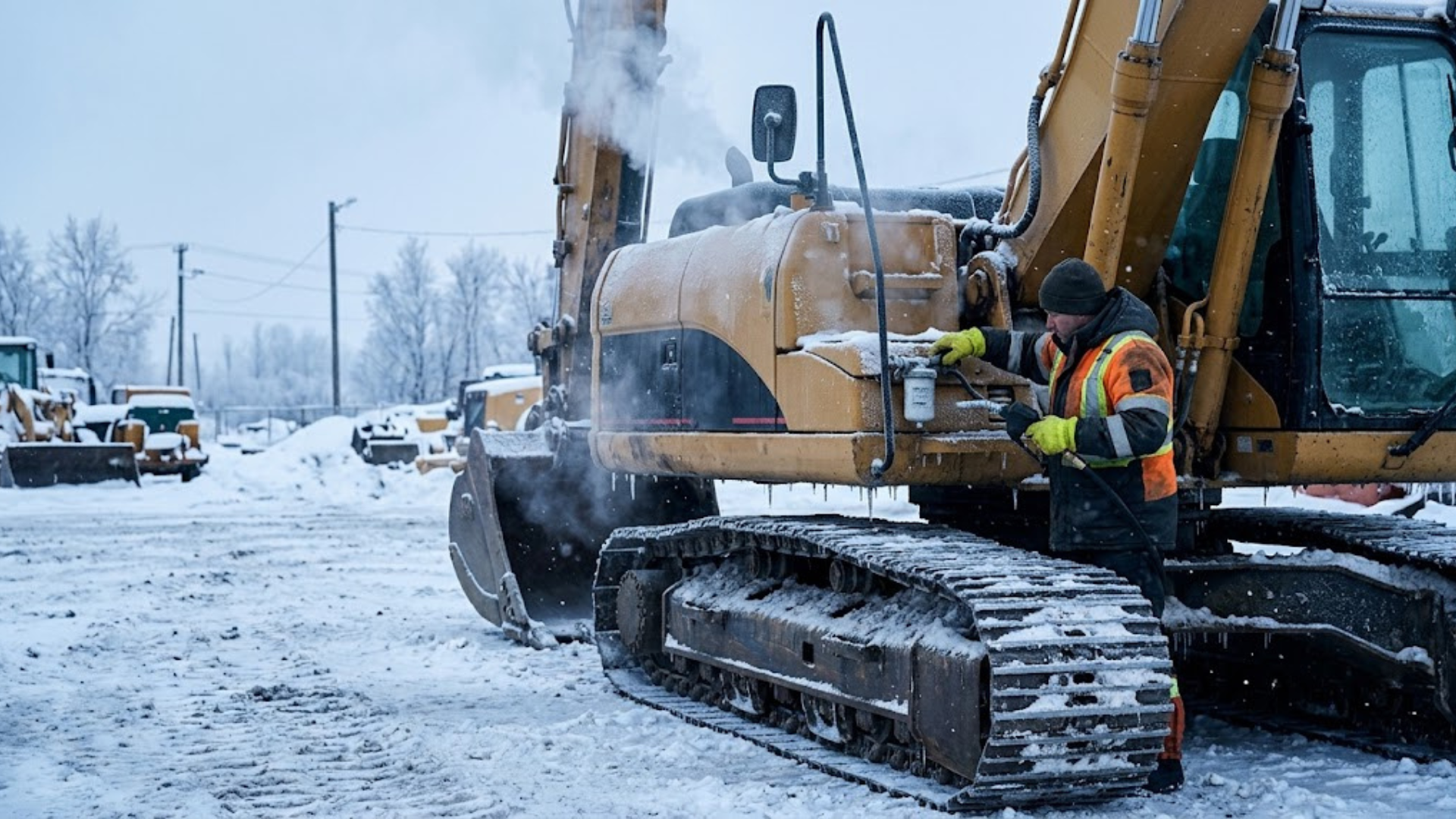
Winter brings severe challenges to commercial construction and excavation sites. Freezing temperatures attack diesel-powered machinery on two distinct fronts. First, the chemical structure of diesel fuel changes rapidly as ambient air temperatures drop. Second, heavy equipment iron, hydraulics, and electrical systems experience intense mechanical friction.
Ignoring winter conditions leads to blown hydraulic seals, burnt starters, and gelled fuel systems. These failures cost thousands of dollars in mechanical repairs and lost job site productivity. Understanding how cold weather affects diesel fuel and heavy equipment is essential for every fleet manager and operator.
The Science of Fuel Gelling: Paraffin Wax and Freezing Points
Diesel fuel naturally contains paraffin wax. This wax provides high energy density and essential engine lubricity in normal weather. However, cold temperatures disrupt this chemical balance.
The Chemical Shift: Why Standard #2 Diesel Solidifies
Standard number two diesel functions well in warm and mild conditions. As temperatures drop below 32°F, paraffin molecules begin to separate from the liquid hydrocarbon mix. These molecules crystallize into microscopic solid wax flakes. As the cold deepens, these flakes cluster together into larger wax structures. This solid wax rapidly coats fuel lines, tanks, and filtration media.
Cloud Point vs. Cold Filter Plugging Point (CFPP) vs. Pour Point
Three distinct thermal benchmarks define how diesel reacts to winter cold:
-
Cloud Point: The temperature where wax crystals first precipitate, creating a cloudy fuel appearance. This typically occurs between 14°F and 20°F.
-
Cold Filter Plugging Point (CFPP): The critical operational limit where accumulated wax crystals block the micronic pores of the fuel filter. This chokes fuel flow and starves the engine.
-
Pour Point: The lowest temperature at which diesel fuel maintains liquid mobility. Below this point, fuel turns into an immobile petroleum jelly that cannot be pumped.
Critical Temperature Milestones for Diesel Fuel
This quick reference guide outlines fuel phase changes, machinery symptoms, and operator action items across four temperature tiers:
The Hidden Enemy: Moisture Condensation and Frozen Lines
Water in your fuel system causes immediate winter disaster. Cold weather accelerates moisture buildup through several specific failure paths:
-
Warm return fuel heats up cold fuel tanks during normal operation.
-
As machinery cools overnight, moisture condenses along the internal metal walls of partially filled tanks.
-
Condensed water droplets sink below the lighter diesel fuel and collect at low points.
-
Freezing temperatures turn this standing water into solid ice crystals within lines, petcocks, and filters.
-
Ice crystals expand inside fuel-water separator bowls, causing plastic housings to crack and bleed air into the system.
How Cold Weather Cripples Heavy Equipment Systems
Low temperatures stress mechanical systems far beyond the fuel tank. Fleet managers must account for cold-induced issues across multiple machine components.
Sluggish Hydraulics and Cavitation Risks
Cold weather increases hydraulic fluid viscosity dramatically. Thick fluid cannot pass smoothly through tight valves and cylinders. Operators notice slow boom movements and sluggish swing drives. Worse, thick oil causes pump cavitation, stripping microscopic metal shavings into the entire hydraulic loop.
Battery Cranking Capacity vs. Starter Draw
Lead-acid batteries lose roughly 50% of their cranking power at 0°F. Concurrently, a frozen diesel engine requires twice the cranking torque to turn over. This immense power draw drains weak batteries within seconds and can overheat starter motors.
Engine Oil Viscosity and Cold Friction
Conventional engine oil thickens in the cold, resembling heavy syrup. During dry cold starts, thick oil fails to reach upper cylinder heads and turbocharger bearings promptly. Those initial 30 seconds of high friction cause severe premature engine wear.
DEF (Diesel Exhaust Fluid) Freezing at 12°F
Modern Tier 4 engines rely on diesel exhaust fluid (DEF). DEF is an aqueous urea solution that freezes solid at 12°F. Modern machines feature internal tank heaters, but start-up delays and emission fault codes remain common during extreme freezes.
Warning Signs Your Equipment Is Struggling in the Cold
Watch for these diagnostic warnings before mechanical components suffer permanent damage:
-
The engine cranks for extended cycles without catching combustion.
-
The engine starts, runs for two minutes, and then stalls out completely.
-
The machine experiences sudden RPM surging, rough idling, and throttle hesitation.
-
Exhaust pipes emit dense white smoke, indicating atomized but unburned fuel inside cold cylinders.
-
Diagnostic panels throw low fuel rail pressure and injection system fault codes.
Fuel Solutions: Additives vs. Winter Blends
Operators must balance fuel chemistry between standard number two diesel and kerosene-rich number one diesel. Number two diesel provides maximum horsepower and optimal fuel economy, but it gels quickly. Number one diesel features lower wax levels and withstands cold temperatures, but it delivers fewer BTUs and lower lubricity for injection pumps.
Most northern fuel suppliers deliver blended fuels throughout winter. In addition, chemical anti-gel treatments modify wax crystal structures to lower the CFPP. Always add anti-gel additives directly into the fuel tank before pumping fresh fuel. This practice ensures thorough mechanical mixing. Never add cold anti-gel into a tank of already-gelled fuel, as it cannot break down solid wax without heat.
Essential Winter Pre-Start Protocols for Job Site Operators
Before you run heavy machinery in freezing weather, follow these steps in order to avoid damage:
-
First, drain all water from your fuel-water separators every single morning before you start the engine.
-
Next, plug in electric engine block heaters or pan warmers for at least two to three hours before work begins.
-
Then, turn the ignition key to warm up the glow plugs or air heaters twice before you crank the starter.
-
After that, let the engine idle at low speed for 10 to 15 minutes so motor oil can reach the turbo and upper parts.
-
Finally, move all boom, arm, and bucket parts smoothly through their full range without lifting any heavy loads.
Best Practices for Job Site Bulk Fuel Storage in Freezing Weather
In addition, protect your bulk fuel tanks on site to keep your fuel clean and safe from the cold:
-
Keep Tanks Full: To begin with, keep all aboveground fuel tanks at least 90% full so air pockets cannot turn into water drops.
-
Block the Wind: In the same way, place your fuel tanks behind walls or inside open sheds to shield them from harsh winter winds.
-
Filter Out Water: Furthermore, put water-stopping fuel filters right on your fuel pump lines before you pump fuel into your fleet.
-
Trap Moist Air: As a result, replace standard tank vent caps with drying breather caps that pull moisture out of the air.
Summary Checklist: Heavy Equipment Winterization & Maintenance
Overall, winter survival for heavy machinery requires quick, active care. Therefore, use this simple checklist to keep your machines in great shape:
-
Engine Oils: Switch to easy-flowing synthetic multi-grade oils, such as 0W-40 or 5W-40.
-
Cooling Systems: Check antifreeze freeze levels with a simple hand tester.
-
Electrical Systems: Clean battery posts, check your alternator, and test each battery under a full power load.
-
Hydraulic Fluids: Check intake strainers for dirt, and then switch to winter-grade hydraulic oil that flows easily in the cold.
-
Hoses and Belts: Replace stiff or cracked rubber parts right away so high pressure does not burst them open during shifts.
Frequently Asked Questions
What temperature does diesel fuel start to gel?
Standard #2 diesel typically reaches its cloud point between 14°F and 20°F, when paraffin wax crystals first form and the fuel looks hazy. Filter plugging (CFPP) usually occurs lower, around 15°F to 0°F, depending on the blend and any biodiesel content.
What is the difference between cloud point, cold filter plugging point, and pour point?
Cloud point is when wax crystals first appear. Cold Filter Plugging Point (CFPP) is when those crystals block the fuel filter and stop fuel flow. Pour point is the lowest temperature at which the fuel still flows at all. Equipment usually fails at the CFPP, not the pour point.
How do I prevent diesel from gelling in heavy equipment?
Add anti-gel additive before temperatures drop (ideally while the fuel is still warm), switch to a winter blend (#2/#1 or kerosene-treated), keep tanks as full as practical to limit condensation, and drain water separators daily. Never add cold anti-gel to already gelled fuel.
Why does water in the fuel system cause so many winter problems?
Moisture condenses inside partially filled tanks overnight, sinks, and freezes into ice crystals. Ice blocks filters, cracks separator bowls, and introduces air into the system. Keeping tanks full and draining separators every morning prevents this.
How does cold weather affect hydraulic systems and batteries on heavy equipment?
Hydraulic fluid thickens dramatically, causing sluggish movement and pump cavitation. Lead-acid batteries lose about 50% of their cranking power at 0°F while the engine needs roughly twice the torque to turn over, which can burn out starters.
Does DEF freeze in cold weather?
Yes. Diesel Exhaust Fluid freezes solid at approximately 12°F. Most modern machines have DEF tank heaters, but extreme cold can still cause delayed starts and emission-related fault codes until the system thaws.
Should I use anti-gel additive or switch to winter blend diesel?
Both help. Anti-gel modifies wax crystal size so fuel still passes the filter. Winter blends (or #1 diesel) contain less paraffin to begin with. Many fleets use treated winter blend fuel for the best protection in sustained sub-freezing conditions.
What are the first warning signs that my equipment is having cold-fuel problems?
Extended cranking, engines that start then stall after a couple of minutes, sudden power loss under load, white exhaust smoke, rough idle, and low fuel-rail pressure or injection fault codes are common early indicators.
In conclusion, do not let freezing winter air stall your work and eat into your money. Instead, guard your fuel lines and diesel equipment early with winter fuel blends, steady warm-up steps, and planned winter service right now.
Other Post:
Winter Fuel Management: Tips for Storing and Using Diesel and Heating Oil
Should You Buy Heating Oil in Bulk?
Finding Reliable Heating Oil Delivery Near You in Bucks County: The Complete Homeowner’s Guide


