Heating oil tanks operate quietly in basements, utility rooms, and yards for decades. Homeowners often overlook them until an unexpected issue arises—a faint petroleum odor, sudden fuel loss, or an oily sheen near the base. When problems appear, the immediate question is whether a localized repair will suffice or if full replacement is necessary.
The answer centers on how oil tanks fail: they deteriorate from the inside out. Water condensation gathers along the interior base, mixing with sulfur sediment to form corrosive acids that steadily eat through the steel. Once external symptoms show, the tank’s structural integrity is compromised. Choosing between repair and replacement is an environmental and financial choice that directly impacts home safety and legal liability.
Critical Warning Signs of Tank Failure
Recognizing degradation early prevents minor mechanical malfunctions from becoming hazardous leaks. Watch for these primary red flags:
-
Blistering Paint and Rust Flakes: Paint bubbling or peeling along the lower perimeter signals internal corrosion pushing through the steel hull.
-
Weeping Seams or Damp Spots: Moisture or dark stains along factory weld lines indicate that fuel is penetrating structural seams under hydrostatic pressure.
-
Unstable Foundation Legs: Corroded, bent, or settling legs cause the vessel to tilt, straining copper fuel lines and risking sudden collapse.
-
Clogged Fuel Lines and Filters: Frequent filter replacements choked with dark sludge indicate the internal shell is shedding degraded rust and sediment.
-
Persistent Petroleum Odors: Lingering fuel odors indoors indicate vapor escaping through vent flaws or micro-pinholes.
Lifespan Realities: Aboveground vs. Underground Tanks
Operating age is the most reliable predictor of tank failure. Even a spotless exterior cannot prevent metal fatigue over decades of continuous thermal cycling:
-
Aboveground Storage Tanks (ASTs): Indoor basement tanks typically last 15 to 25 years shielded from weather extremes. Outdoor aboveground units endure rain, snow, and freeze-thaw cycles, reducing their lifespan to 10 to 15 years.
-
Underground Storage Tanks (USTs): Buried tanks face an aggressive environment. Acidic soil, high water tables, and ground currents induce galvanic corrosion from the outside while moisture attacks from within. Most residential underground tanks reach the end of their safe operating life within 10 to 15 years.
Cost Comparison: Repair Expenses vs. Replacement Investment
Evaluating financial outlay requires comparing immediate repair costs with the longevity and liability of a full replacement.
| Evaluation Factor | Component Repair / Line Fix | Aboveground Tank Replacement | Underground Replacement / Abandonment |
| Typical Upfront Cost | $150 – $800 | $1,800 – $4,200 | $3,500 – $9,000+ |
| Project Duration | 1 to 3 hours | 4 to 8 hours | 1 to 3 days (excavation required) |
| Added Usable Life | 0 to 2 years | 20 to 30 years | 25+ years (transitioned to AST) |
| Permits & Inspections | Rarely required | Local mechanical & fire permits | Mandatory municipal & environmental permits |
| Long-Term Leak Risk | High (aging hull remains) | Extremely low | Completely eliminated if moved aboveground |
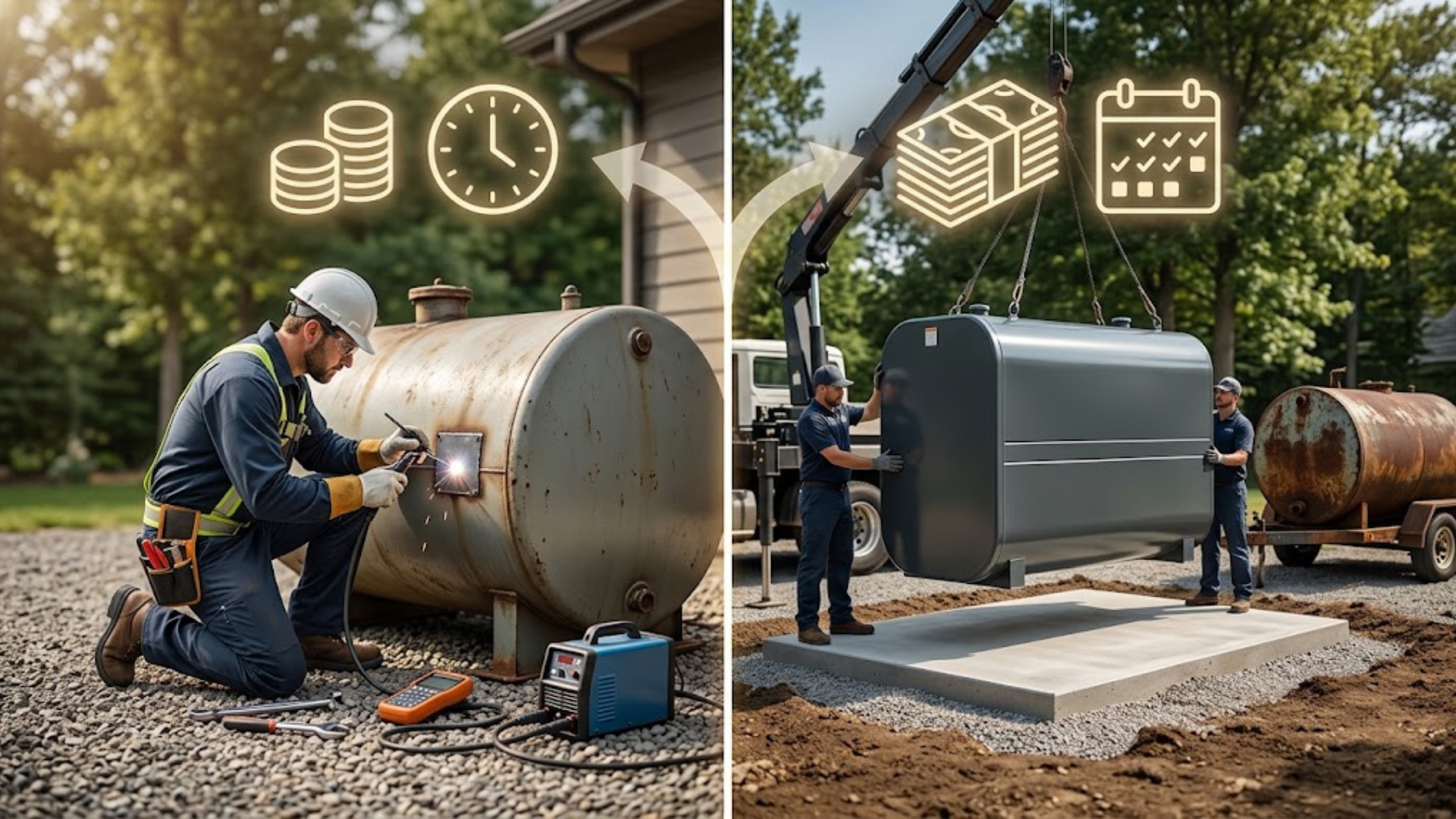
Minor repairs appear economical, but spending money on an aging steel vessel yields diminishing returns as corrosion spreads across adjacent metal panels.
When Can You Safely Repair an Oil Tank?
Repairing an oil storage system is viable only when the structural hull is sound and defects are limited to external hardware:
-
Faulty Fuel Gauges: Jammed float gauges or cracked sight glass assemblies can be unthreaded and replaced without altering the tank structure.
-
Leaking Valves and Fittings: Drips occurring strictly around the bottom shutoff valve, flare fittings, or fuel supply lines can be resolved with fresh brass fittings.
-
Vent and Fill Pipe Obstructions: Clogged vent caps, damaged whistling alarms, or corroded fill pipes can be replaced independently.
-
Surface-Level Paint Touch-ups: If an indoor unit is under 8 years old with light surface oxidation, it can be sanded, treated with a rust inhibitor, and repainted.
When Replacement Is Mandatory
Never patch, solder, or apply epoxy to a leaking tank shell. Because condensation corrodes the bottom from within, a visible pinhole indicates the surrounding metal is paper-thin. A surface patch creates an unstable temporary seal that easily ruptures under the weight and pressure of a fresh oil delivery.
Replacement is mandatory when:
-
A visible pinhole, weeping patch, or seam separation appears anywhere on the vessel hull.
-
Ultrasonic thickness testing indicates that the steel wall has fallen below safety standards.
-
The tank has reached or exceeded 20 years of active residential service.
-
The vessel exhibits structural bowing, buckling, or leg mount deformation.
Environmental Risks and Homeowner Insurance Realities
The primary danger of an oil tank failure is the environmental remediation following a leak. A single gallon of heating oil can contaminate drinking water wells, migrate under foundations, and generate hazardous vapor plumes. Soil excavation, vapor extraction, and groundwater treatment routinely cost between $20,000 and $100,000+.
Standard homeowners insurance policies almost universally include pollution exclusion clauses. Unless you carry a specific oil release endorsement, cleanup costs and third-party liabilities fall entirely on the homeowner, particularly if the tank was neglected or operated past its rated service life.
The 50% Rule and Decision Framework
To determine the right course of action for your heating oil setup, apply these three decision criteria:
First, calculate the 50% threshold. If the combined cost of valve repairs, line maintenance, and labor exceeds 50% of the price of a new tank installation, replace the unit immediately. Sinking capital into an aging vessel rarely pays off.
Second, factor in tank age. If the tank is older than 12 years, spending more than $400 on mechanical repairs is wasted money on an asset nearing structural failure. Reinvest those funds into a modern replacement unit with warranty protection.
Finally, evaluate secondary containment needs. Older single-wall tanks carry substantial spill risk. Upgrading to a modern double-wall or bunded system delivers long-term security, satisfies local environmental codes, and protects property value.