
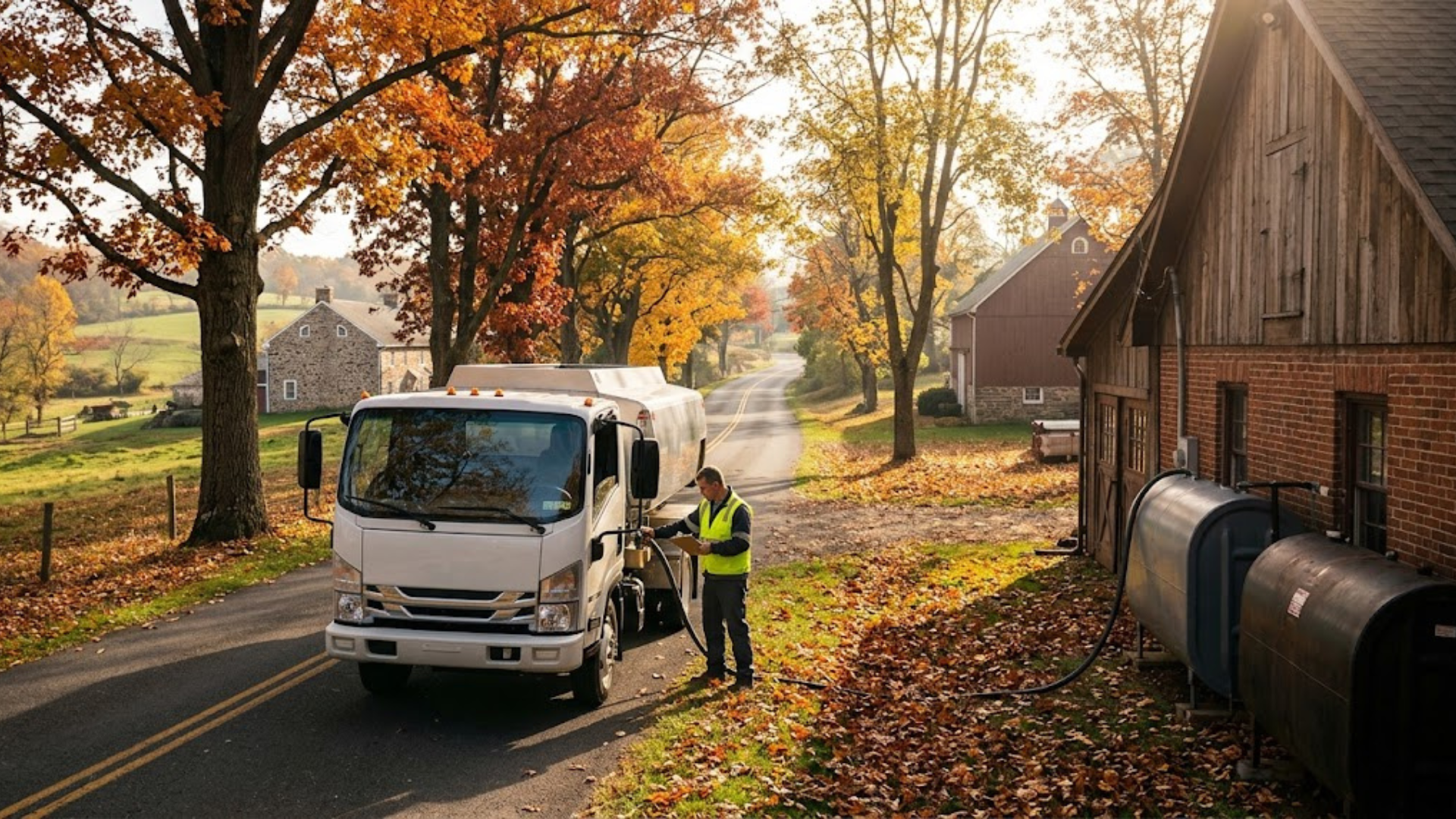
Pennsylvania weather changes fast every autumn. Warm October afternoons quickly turn into freezing November nights across Bucks County. Waiting until winter to plan your fuel supply creates expensive problems. Emergency deliveries cost extra, and cold weather ruins untreated diesel. Proactive fall fuel planning protects your facility, fleet, and budget before the first frost hits.
Why Autumn Is the Critical Window for Bucks County Commercial Fuel Strategy
Southeastern Pennsylvania faces unique supply pressures every year. As temperatures drop, thousands of local homes turn on their furnaces. Simultaneously, commercial facilities and trucking fleets increase their fuel orders. Consequently, regional fuel terminals experience heavy congestion.
Moreover, winter storms frequently disrupt traffic along I-95, Route 611, and the PA Turnpike. Ordering fuel in October guarantees smooth deliveries before icy roads slow down transport trucks. Therefore, smart facility managers treat autumn as their primary preparation window.
Analyzing Current Heating Oil and Diesel Market Trends in Bucks County
Fuel prices follow predictable seasonal cycles in our region. Early fall typically offers lower and steadier per-gallon rates. However, wholesale distillate costs climb rapidly once sustained cold weather arrives across the Northeast.
Commercial Heating Oil Preparation for Facilities and Warehouses
Warehouses, greenhouses, and office complexes rely on steady heat to protect inventory and staff. Preparing your heating oil system early prevents mid-winter breakdowns.
Scheduling Pre-Season Tank Inspections and Cleaning
-
Check for water buildup: Condensation settles at the bottom of tanks and causes internal rust.
-
Remove microbial sludge: Bacteria grow in warm summer fuel and clog burner nozzles in winter.
-
Inspect vent lines: Clear away leaves, nests, and debris so tanks breathe properly during fills.
-
Test safety gauges: Verify that overfill alarms and tank gauges read accurately.
Upgrading to Automatic Delivery and Tank Monitoring
Manual fuel ordering often leads to accidental run-outs. Instead, wireless tank monitors track your exact fuel levels in real time. Local suppliers combine this data with degree-day weather forecasting. As a result, trucks automatically refill your tanks from Quakertown to Bristol before levels drop too low.
Winterizing Commercial Diesel Fleets and Heavy Equipment
Cold temperatures thicken standard diesel fuel into a waxy gel. This process clogs fuel filters and shuts down engines on job sites and highways.
Preventing Diesel Gelling and Cold-Filter Plugging
-
Switch to winterized blends: Transition from standard #2 diesel to winterized mixes by mid-October.
-
Add anti-gel treatments: Dose bulk storage tanks with cold-flow improvers before temperatures hit 32°F.
-
Drain water separators daily: Remove trapped moisture from vehicle filters before it freezes overnight.
-
Top off fleet tanks nightly: Full tanks leave less room for humid air to condense into water.
-
Replace aging fuel filters: Install fresh filters in autumn so engines handle thicker winter fuel easily.
Managing On-Road vs. Off-Road Diesel Inventory
Construction firms and landscapers often use both diesel types. Clear ultra-low sulfur diesel (ULSD) powers highway trucks and includes road taxes. Conversely, red-dyed off-road diesel powers excavators, tractors, and generators without highway taxes. Keep these fuels strictly separated to avoid heavy compliance fines and mis-fueling accidents.
Heating Oil vs. Commercial Diesel: Fall Fuel Planning Comparison
Different commercial fuels require distinct preparation steps. Review this quick guide to align your facility and fleet strategies.
| Operational Factor | Commercial Heating Oil (#2) | On-Road Diesel (ULSD) | Off-Road Dyed Diesel |
| Primary Business Use | Boilers, furnaces, and warehouse heating | Box trucks, semis, and commercial vans | Excavators, tractors, and backup generators |
| Key Fall Prep Action | Check tank sludge and tune up burners | Switch to winter blend and change filters | Drain water separators and add anti-gel |
| Cold-Weather Risk | Outdoor tank waxing and line blockages | Fuel gelling below 15°F to 32°F | Moisture freezing in idle equipment lines |
| Tax & Compliance | Heating-exempt for non-highway use | Includes federal and PA highway taxes | Dyed red and tax-exempt for off-road use |
| Recommended Contract | Automatic delivery with price protection | Scheduled bulk drops or mobile wet-hosing | Scheduled bulk refill plus storm priority |
Budgeting and Fuel Contract Options for Pennsylvania Businesses
Choosing the right purchasing agreement stabilizes your operating expenses all winter long.
Fixed-Price and Capped-Rate Fuel Contracts
-
Pro — Budget certainty: You lock in a set price per gallon regardless of market surges.
-
Pro — Downside protection: Capped-rate plans allow your price to drop if market rates fall.
-
Con — Upfront commitment: You must accurately estimate your seasonal gallon volume beforehand.
Will-Call vs. Scheduled Bulk Delivery Agreements
-
Pro — Zero administrative hassle: Scheduled routes eliminate the need to constantly check gauges and place orders.
-
Pro — Lower labor costs: Overnight mobile fleet fueling (wet-hosing) fills your trucks directly in your yard.
-
Con — Less flexibility: Will-call ordering offers spot-buying freedom, yet it risks delivery delays during blizzards.
Emergency Backup Generator Fuel Readiness
Nor’easters and ice storms regularly knock out power across Bucks County. Your backup generator only works if its fuel remains fresh and clean. Because generator diesel often sits unused all summer, it degrades and collects water. Hire a specialist to polish your stored fuel and remove contaminants. Additionally, test your automatic transfer switches and secure priority storm refill status with your supplier.
Fuel Storage Safety, Environmental Compliance, and Spill Prevention
Strict environmental rules govern commercial fuel storage in Pennsylvania. Follow these essential practices to stay compliant with PA DEP and EPA standards:
-
Inspect secondary containment: Check dikes and double-walled tanks for cracks before winter freezes arrive.
-
Update your SPCC plan: Maintain a Spill Prevention, Control, and Countermeasure plan if you store over 1,320 gallons above ground.
-
Stock winter spill kits: Keep absorbent pads, booms, and granular sorbents accessible near every fill port.
-
Verify tank labeling: Ensure all fill pipes clearly display fuel types and capacity limits.
How to Choose a Reliable Commercial Fuel Supplier in Bucks County
Your fuel vendor acts as a vital operational partner during severe weather. Evaluate local providers using these five criteria:
-
Local terminal access: Choose a company with bulk storage serving Upper, Central, and Lower Bucks County.
-
24/7 emergency dispatch: Confirm that live technicians answer phones during nights, weekends, and blizzards.
-
Multi-fuel capability: Pick one vendor that supplies heating oil, on-road diesel, off-road diesel, and DEF.
-
Winter additive programs: Verify that the supplier pre-blends winterized diesel at the rack for proper mixing.
-
Transparent billing: Demand clear pricing without hidden hazmat or emergency surcharges.
(FAQ) on Fall Commercial Fuel Planning
When should Bucks County businesses switch to winterized diesel? Switch to winterized diesel by mid-to-late October. Early treatment ensures winter additives circulate through your tanks and vehicle lines before overnight temperatures drop below freezing.
Can commercial heating oil and off-road diesel work interchangeably? No, you should not swap them freely. Although both share a similar base distillate, off-road diesel meets stricter sulfur and cetane standards required by modern Tier 4 diesel engines.
How full should commercial fuel tanks stay entering November? Keep your storage tanks between 75% and 85% full entering November. High fuel levels minimize air space, prevent internal condensation, and give your business a reliable two-week emergency buffer.
What is mobile fleet fueling, and does it save money? Mobile fleet fueling, or wet-hosing, brings a fuel truck directly to your yard overnight. It eliminates paid driver hours wasted at retail gas stations and stops fuel card fraud.
Other Post:
Finding Reliable Heating Oil Delivery Service Near You in Bucks County
How to Prepare for a Bucks County Winter: Don’t Forget Your Heating Oil!
Top 5 Signs You Need an Oil Tank Inspection or Repair in Bucks County