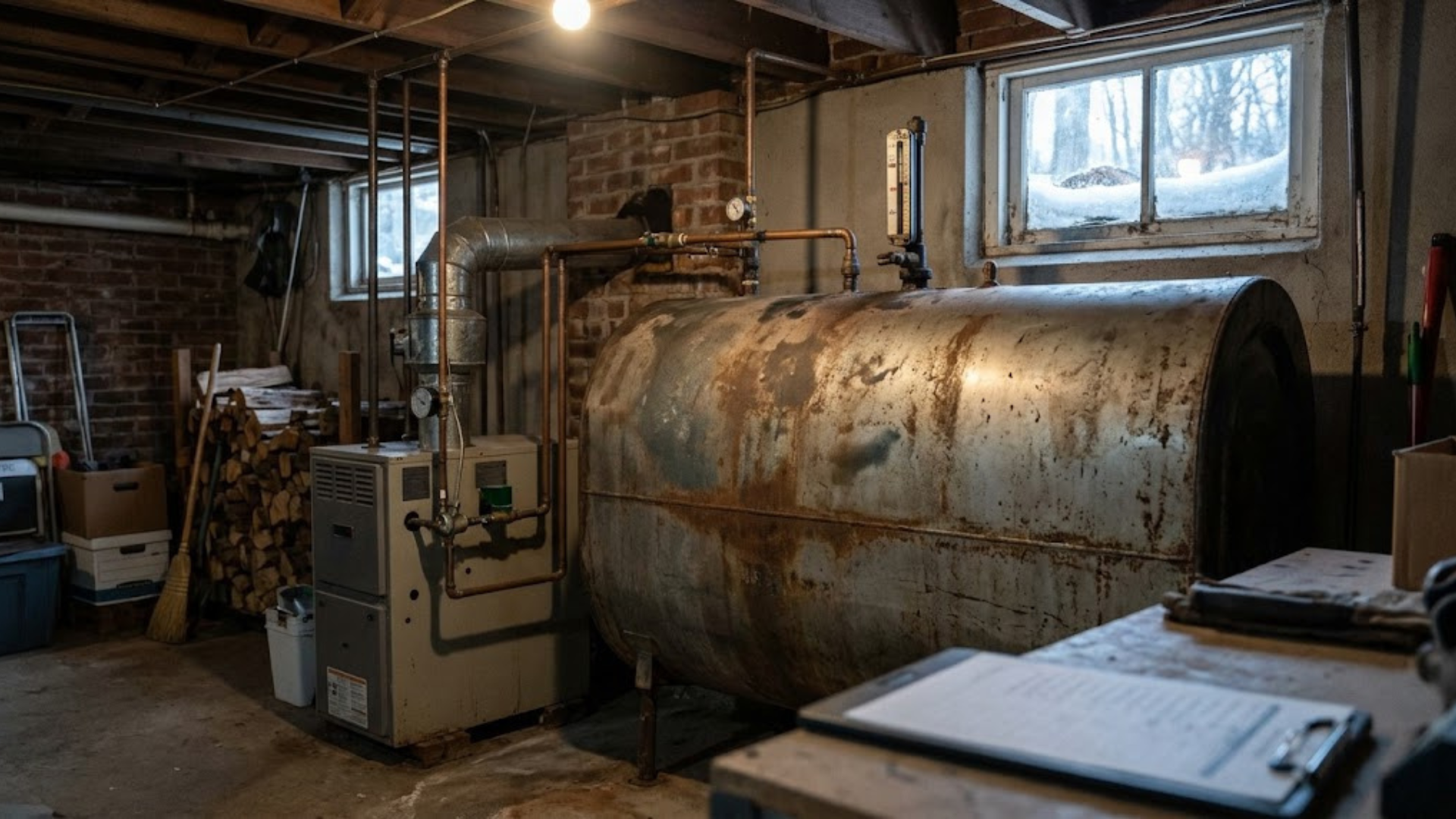
You should fill your heating oil tank to at least 75% to 85% capacity before winter arrives. Better yet, top off the tank completely in early autumn. A standard 275-gallon tank holds roughly 240 to 250 gallons of usable fuel. Technicians leave the remaining space empty for thermal expansion. Consequently, starting winter with a full tank protects your home against sudden freezes, delivery delays, and internal tank corrosion.
The Golden Rule of Pre-Winter Tank Levels
Many homeowners wait until their gauge hits empty before scheduling a heating oil delivery. However, delaying your fall fill-up creates major financial and mechanical risks. Therefore, filling your tank early gives you four clear benefits:
-
Eliminates Condensation and Rust: Empty space inside a steel tank traps humid air. When temperatures drop, moisture condenses on the cold interior walls. Water sinks to the bottom because it is heavier than oil, and it eventually rots the tank from the inside out.
-
Locks In Lower Prices: Heating oil prices climb quickly once freezing weather drives up regional demand. Ordering in September or October helps you avoid peak winter rate spikes.
-
Prevents Sludge Clogs: Dirt and sediment settle at the bottom of your tank over the summer. Running your fuel level low pulls this sludge into your fuel line, which clogs filters and shuts down your furnace.
-
Avoids Emergency Run-Out Fees: If you run out of fuel during a blizzard, suppliers charge steep emergency delivery fees. Additionally, you must pay a technician to bleed trapped air from your fuel lines.
Understanding Your Heating Oil Tank Capacity and Gauge
Most residential heating oil tanks feature a clear float gauge on top. This gauge displays E, 1/4, 1/2, 3/4, and F. Because suppliers never fill tanks to 100% physical volume for safety, you must know your usable gallon counts. Use the table below to check your exact fuel reserve before winter begins:
How Much Heating Oil Does a House Use Per Day in Winter?
On average, a single-family home burns 2.5 to 5 gallons of heating oil per day during mild winter weather (30°F to 40°F). However, daily consumption jumps sharply during severe cold snaps. When temperatures plunge below 15°F, your furnace can burn 7 to 10 gallons per day. Across an entire heating season from November through March, the average household consumes roughly 500 to 800 gallons total.
How to Calculate Your Home’s Exact Burn Rate
You can easily calculate your home’s daily burn rate using past delivery receipts. First, divide the gallons delivered by the number of days since your previous fill-up. For instance, if you bought 180 gallons after 45 days, your home averages 4 gallons per day. Next, divide your remaining tank gallons by that daily rate. This simple formula tells you exactly how many days of heat remain in your tank.
Key Factors That Affect Your Winter Heating Oil Usage
Two identical houses on the same street often burn completely different amounts of fuel. Specifically, five major factors control your daily winter heating oil usage:
-
Home Square Footage and Layout: Larger homes and rooms with high, vaulted ceilings require far more heat to stay warm.
-
Insulation and Drafts: Poor attic insulation and leaky window frames let up to 30% of your heat escape. As a result, your furnace runs much longer to maintain indoor comfort.
-
Thermostat Settings: Every degree you raise your thermostat above 68°F increases fuel consumption by roughly 3%.
-
Furnace or Boiler Age: Heating units over 20 years old often run at 60% to 70% efficiency. Consequently, older systems burn 15% to 25% more oil than modern high-efficiency models.
-
Domestic Hot Water: Many oil boilers also heat tap water for showers and laundry. In this case, expect your system to burn an extra 0.5 to 1 gallon of oil every day.
When Should You Reorder Heating Oil During Winter?
Never let your heating oil tank drop below the 1/4 (25%) mark during winter. For a standard 275-gallon tank, one-quarter full equals roughly 60 gallons of fuel. This amount gives you a vital 10-to-15-day safety buffer. Therefore, ordering at 1/4 full protects your family if a heavy snowstorm blocks local roads or delays delivery trucks for a week.
Pre-Winter Heating Oil Tank Maintenance Checklist
Preparing your tank before freezing weather hits prevents sudden mid-winter breakdowns. Follow both parts of this checklist every autumn.
DIY Homeowner Checks
-
Inspect the Tank Exterior: Check the tank body and legs for rust spots, wet patches, weeping seams, or strong oil odors.
-
Test the Float Gauge: Gently tap the plastic vial on top of the tank to verify that the float moves freely.
-
Clear the Fill Pipe: Trim overgrown bushes and remove clutter so drivers can easily reach your exterior fill and vent pipes.
Professional and Cold-Weather Prep
-
Schedule an Annual Tune-Up: Hire an HVAC technician to clean the burner, test efficiency, and replace the oil filter and nozzle.
-
Add Winter Fuel Treatment: If your tank sits outdoors or in an unheated garage, pour in an anti-gel additive. This treatment stops oil from thickening in sub-zero weather.
Automatic Delivery vs. Will-Call Ordering
Choosing the right delivery plan saves both time and stress during winter. Automatic Delivery uses weather-tracking software to estimate your fuel usage accurately. Your supplier then schedules a refill automatically when your tank nears 30% capacity. As a result, you never have to check your gauge or worry about running dry.
On the other hand, Will-Call Ordering puts you in full control of every purchase. You can compare daily rates and buy from whichever local dealer offers the lowest cash price. However, you must check your gauge weekly and call before your tank drops below 25%.
5 Proven Ways to Cut Your Winter Heating Oil Bill
You can lower your winter fuel bills without sacrificing indoor warmth. Apply these five simple habits right away:
-
Install a Smart Thermostat: Lowering your heat by 7°F to 10°F for 8 hours while sleeping or working cuts annual heating costs by up to 10%.
-
Seal Air Leaks: Apply fresh weatherstripping to exterior doors and caulk drafty window frames to trap warm air inside.
-
Replace Air Filters Monthly: Dirty forced-air furnace filters block airflow and force your burner to work harder.
-
Reverse Ceiling Fans: Switch ceiling fans to spin clockwise on low speed. This simple trick pushes trapped warm air down from the ceiling.
-
Join a Price-Protection Plan: Ask your fuel supplier about pre-buy or price-cap programs in late summer to shield your budget from winter price hikes.
What to Do If You Run Out of Heating Oil in Winter
If your tank runs completely dry during winter, act quickly and follow these three steps:
-
Turn Off the Furnace: Flip the red emergency power switch off immediately. Otherwise, the oil pump can burn out while trying to pull dry air.
-
Request Emergency Delivery: Call your oil supplier right away and report a complete run-out.
-
Bleed the Fuel Line: Running empty pulls air and bottom sludge into the line. After the driver refills your tank, bleed the air from the line and press the reset button once. If the furnace does not ignite, call a technician immediately.
(FAQs)
Is it bad to leave a heating oil tank half full over summer and fall? Yes, leaving a tank half empty invites condensation. Humid air collects on the exposed inner walls, creating water buildup that causes rust and bacterial sludge. Always fill your tank completely in spring or early fall.
How long will 100 gallons of heating oil last in winter? At a typical winter burn rate of 3 to 5 gallons per day, 100 gallons of heating oil lasts roughly 20 to 33 days. However, extreme cold snaps will shorten that timeframe.
Can heating oil freeze in an outdoor tank? Heating oil starts to gel and turn cloudy around 16°F (-9°C). In sub-zero weather, thick oil can clog your fuel lines completely. Therefore, owners of outdoor tanks should always use anti-gel additives or blend #2 heating oil with kerosene.
Other Post:
Affordable Heating Oil Delivery in Bensalem, PA: A Homeowner’s Guide
Finding Reliable Heating Oil Delivery Near You in Bucks County: The Complete Homeowner’s Guide
Finding Reliable Heating Oil Delivery Service Near You in Bucks County